Boulder Valley addresses antisemitism following ADL complaint
Superintendent Rob Anderson takes responsibility; ‘ultimately, we have to do better’
By Amy Bounds | abounds@prairiemountainmedia.com | Boulder Daily Camera
PUBLISHED: August 12, 2026 at 8:49 AM MDT | UPDATED: August 12, 2026 at 10:35 AM MDT
The Boulder Valley School District is planning to add antisemitism to its bullying and nondiscrimination policies, create a coordinated district response to antisemitic incidences, increase educator training and strengthen consequences for repeated acts of hate.
At a Tuesday school board meeting, Boulder Valley Superintendent Rob Anderson shared his plan to address antisemitism in response to the Anti-Defamation League’s federal complaint alleging a Jewish student faced persistent and escalating antisemitic harassment at Boulder’s Southern Hills Middle School.
The U.S. Department of Education Office for Civil Rights Title VI complaint says the student was subjected to antisemitic bullying, slurs and physical assault by multiple classmates throughout seventh and eighth grades. The complaint, filed June 11, also contends that Boulder Valley failed to remedy the hostile environment and provided no meaningful response to stop the harassment.
Anderson apologized to the student and his family at Tuesday’s meeting, saying he’s ultimately responsible as the superintendent.
“When BVSD fails to respond effectively to issues of hate, appropriately and consistently, it creates fear within our community that all students are not safe,” he said.
School board members said they’re committed to making changes to improve the district’s response, including more oversight and better follow through when responding to incidents.
“We are here for our students,” school board President Nicole Rajpal said. “Every student, every single one, deserves to feel equally safe and welcome and like they belong, for every minute of every day that they are with us.”
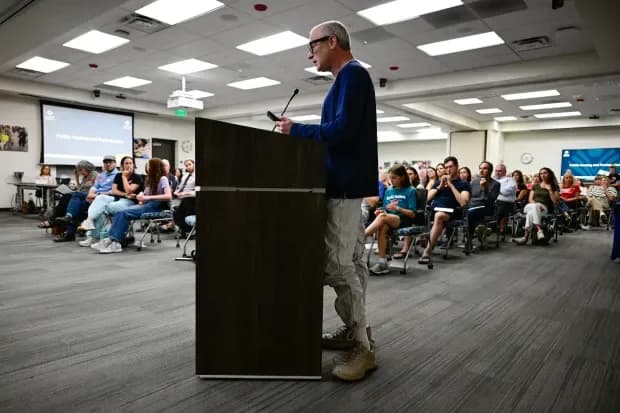
Tuesday’s meeting was the first opportunity for public comment since the complaint, with 45 people speaking on the topic. Multiple parents detailed stories of harassment their Jewish students have experienced or said they’re afraid of possible future harassment.
Southern Hills student Yvette Shell said she’s angry, hurt and “even a little scared about what happened” to her classmate.
“You do have to do something,” she said. “You have to change something.”
Cari Simon, whose fifth grader is slated to attend Southern Hills a year from now, asked if sharing her family’s Jewish traditions in the classroom will mean putting a target on her child’s back. She asked for an independent investigation into why the district’s systems failed at Southern Hills, as well as asking for an independent party to monitor the implementation of the planned changes.
“We don’t want this to just be paper,” she said. “We want to make sure it doesn’t happen again.”
Congregation Har HaShem Rabbi Fred Greene said about 25 of the congregation’s 200 students reported experiencing antisemitism in schools. Of those, seven said they reported it, while one said there was a positive resolution. He said the district needs to create a culture where reporting doesn’t feel punitive while also providing comprehensive antisemitism awareness.
“Our students aren’t feeling safe coming forward,” he said. “They don’t believe their concerns will be understood or taken seriously.”
About a third of the speakers urged the district not to use ADL education programs or antisemitism definitions because of the organization’s political stances, while other speakers praised ADL programs like No Place for Hate.
Lisa Kunkel, a parent of two Boulder Valley students who started a “No to the ADL” change.org petition, said parents and educators are concerned the organization is “using serious incidents of antisemitic bullying to implement its own politically biased agenda.” The ADL, she said, conflates anti-Zionism and criticism of Israel with antisemitism, which could restrict student freedom of speech and prevent educators from using sources that conflict with its policies.
“The ADL is not a neutral civil rights organization, even when its curricula seem uncontroversial,” she said.
In the complaint, the ADL asked the federal Office for Civil Rights to require the district to enforce a zero-tolerance policy for antisemitic conduct; implement mandatory antisemitism training for all teachers, administrators, faculty, staff and students; review district policies on discrimination; and implement stronger student and staff reporting policies that prevent retaliation.
Anderson said the district has voluntarily entered into mediation with the ADL, and that mediation is ongoing. He also met with local Jewish faith leaders and plans to create a superintendent’s advisory committee. He said the committee, which is expected to include students, parents, educators and Jewish community members, will help guide district leadership in making changes.
Anderson added he wanted to make policy changes now instead of waiting for the outcome from mediation. Another change is the creation of a district team to respond to antisemitism reports. The district team will work across schools to “identify patterns, coordinate responses and ensure appropriate follow-up and support.”
“Our system failed,” he said. “My responsibility is to make sure all kids are safe. Any time acts of antisemitism are reported, in that moment we need to support the families and the kids. Ultimately, we have to do better.”
Based on concerns shared during the roughly two hours of public comment, school board members asked for more time to talk through the proposed policy changes, including the language used to define antisemitism. The board plans to start with a closed door session to receive a legal primer on why the current policy includes certain language, then discuss the proposed changes in a public work session.
”We need to take the time to get it correct and really have that thoughtful, intentional conversation with our community to make sure that we get this right,” school board member Ana Temu Otting said.
In a written statement, ADL Vice President of Litigation James Pasch said the organization appreciates the actions Boulder Valley announced to address antisemitism but “will not be satisfied until there is a mediated resolution of our filed Title VI complaint.”
“We look forward to continuing mediation efforts to reach a settlement agreement which demonstrates that BVSD is committed to the systemic and deep work needed to address antisemitism and improve the educational environment for Jewish students now and in the years to come,” he wrote.
ADL Mountain States regional director Susan Rona shared similar sentiments.
“Being in the room for tonight’s board meeting and hearing Jewish students share their experiences in BVSD schools reinforces why this issue and our Title VI complaint is so important,” she wrote. “The district must keep student safety and their experiences with antisemitism front and center and take meaningful action to protect these students, the student named in the complaint and all Jewish students.”